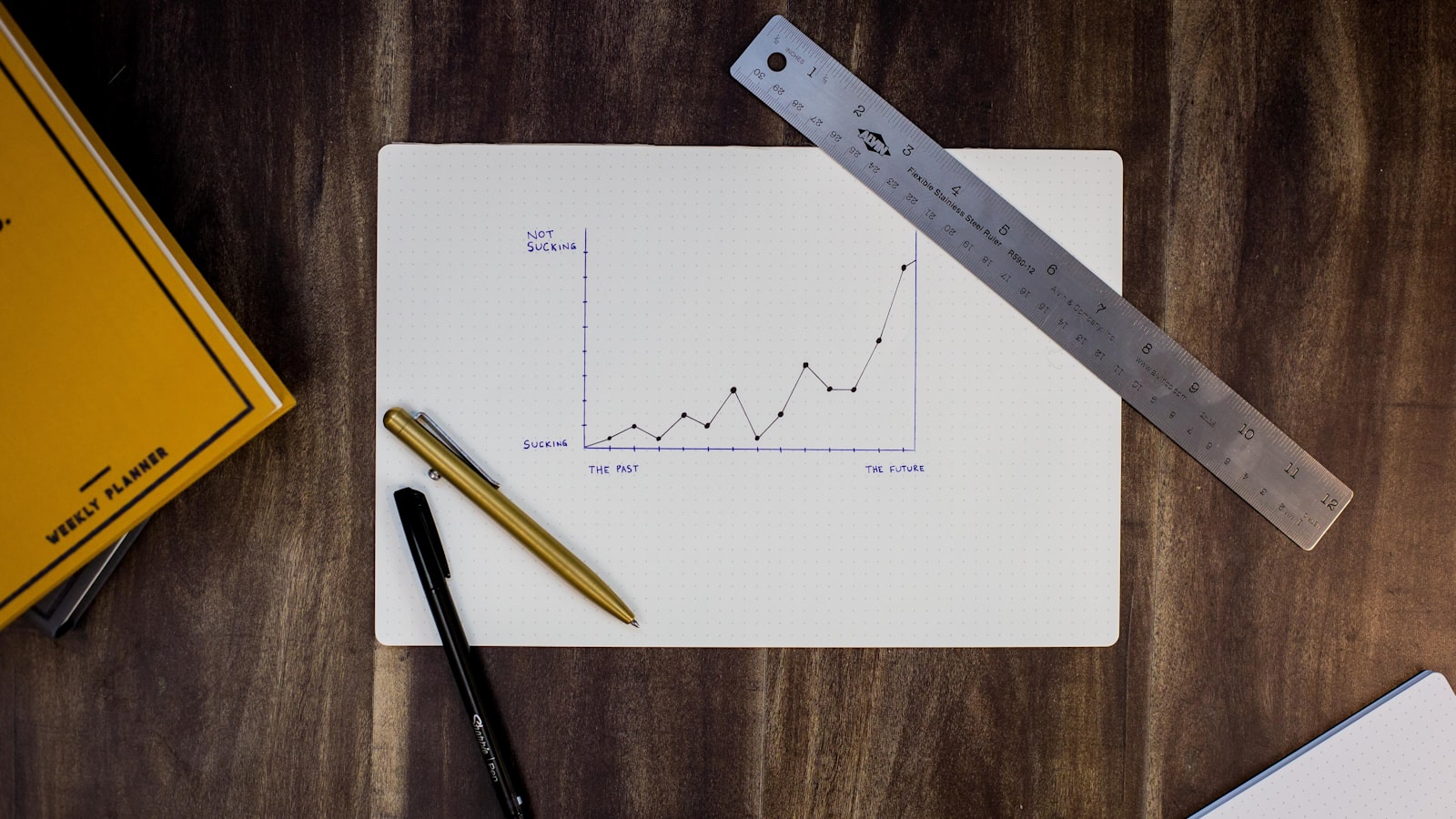
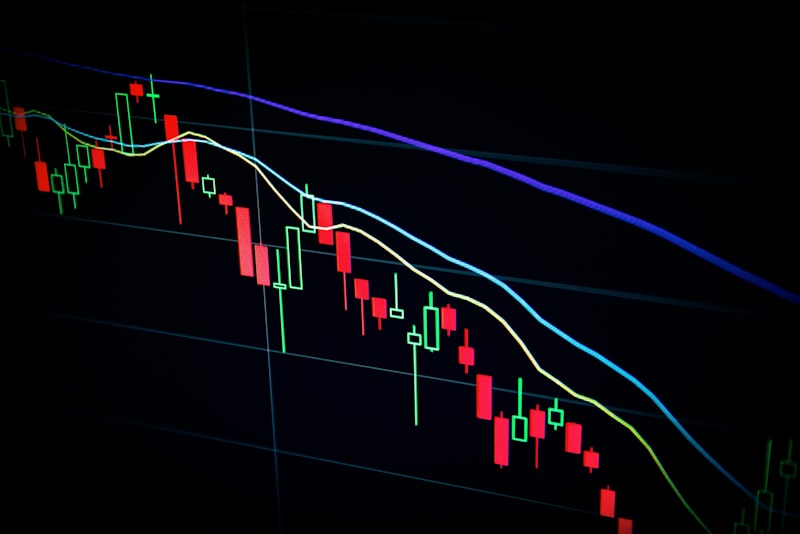
There is a fantasy that sits behind a lot of investing talk: the idea that, with enough attention, you could buy just before the market rises and sell just before it falls. Do that a few times and you would be wealthy. It is a tempting picture, and it is the reason a great many people either lose money trying, or never start at all because they are waiting for the "right moment".
The boring alternative is to ignore the moment entirely. You decide how much you can spare, you invest it on a fixed schedule, and you keep doing that through good news and bad. This is called dollar-cost averaging, and while it sounds almost too simple to matter, it quietly solves the problem that defeats most ordinary investors.
What dollar-cost averaging actually is#
Dollar-cost averaging is investing a fixed amount of money at regular intervals — say, the same sum on the first of every month — regardless of what the price is that day. You do not wait for a dip. You do not pause because the news is grim. The schedule decides for you, and you simply follow it.
Because the price moves around but your contribution stays the same, something useful happens automatically. When prices are high, your fixed amount buys fewer shares. When prices are low, the same amount buys more. Over time, you accumulate more shares at the cheaper prices and fewer at the expensive ones, without ever having to judge which is which. You are not predicting anything. The arithmetic does the work.
This is the opposite of how nervous investors tend to behave. Left to instinct, people pile in when prices are rising and everyone feels confident, then freeze or sell when prices fall and the mood turns dark — buying high and selling low, the exact reverse of the goal. A fixed schedule short-circuits that instinct.
Why timing the market is so hard#
Timing the market means trying to be in when it rises and out when it falls. On paper it is the perfect strategy. In practice it asks something almost impossible: you have to be right twice. You have to sell near the top and buy back near the bottom. Getting one of those right is luck. Getting both right, repeatedly, over a lifetime, is something that even most full-time professionals fail to do.
The deeper problem is that markets do not move in smooth, readable lines. A large share of long-term gains tends to arrive in short, unpredictable bursts — often clustered close to the scary moments when most people have already fled to the sidelines. If you step out to avoid a fall and miss even a handful of those best days, the cost to your long-run return can be severe. The market does not ring a bell to tell you it is safe to come back.
Timing the market asks you to be right twice; investing on a schedule asks you only to keep showing up.
So the choice is not really "clever timing" versus "dull averaging". It is between a strategy that demands near-perfect foresight and one that demands only a little patience. For an ordinary person with an ordinary income and a job that is not staring at charts all day, that is not a close contest.
Where dollar-cost averaging genuinely helps#
The honest case for dollar-cost averaging is not that it squeezes out the highest possible return in every scenario. It is that it makes a good outcome far more achievable for a real human being. Its strengths are mostly about behaviour and emotion, which is exactly where most investing plans fall apart.
- It removes the daily decision. You never have to ask "is now a good time?" — the schedule already answered.
- It keeps you invested through downturns, which is precisely when the cheapest shares are on offer.
- It turns falling prices from a source of panic into a quiet advantage, because your fixed amount simply buys more.
- It builds a habit, and habits survive bad moods in a way that willpower does not.
Notice that none of these are about being smarter than the market. They are about not getting in your own way. The biggest threat to a long-term investor is rarely the market itself; it is the investor's own urge to react. A schedule is a fence around that urge.
The honest trade-offs#
It would be dishonest to present this as a free lunch, so here is the other side. If you happen to have a lump sum to invest, history suggests that putting it to work sooner has, on average, tended to do better than feeding it in slowly — simply because money invested earlier has more time to grow. Spreading a lump sum out is really a way of buying emotional comfort and reducing the sting of bad luck, not maximising the expected result. That comfort can be worth a great deal, but it is worth knowing what you are paying for.
Dollar-cost averaging also does not protect you from loss. If the whole market drops and stays down, your steady contributions drop with it. What the method does is keep you buying through that period, so that you own more when prices eventually recover — if they recover, which is never promised. And it only works if you actually keep going. The strategy quietly fails the moment you abandon the schedule because you have lost your nerve. The discipline is the product.
Choosing the duller path on purpose#
For most people, most of the time, the realistic comparison is not between dollar-cost averaging and some flawless timing strategy. It is between investing steadily and not investing at all — sitting in cash, waiting for a clearer sky that never quite arrives. Measured against that, a simple, automated, unglamorous schedule is enormously powerful, because it gets you started and keeps you in.
So pick an amount you can genuinely sustain, set it to happen automatically, and then let it be boring. Do not congratulate yourself when markets rise; do not panic when they fall. You are not trying to outwit anyone. You are just turning up, again and again, and letting time and arithmetic do what they reliably do. That is not the exciting version of investing. It is the one that ordinary people are most likely to finish.
This article is general education, not investment advice. All investing involves risk, including the possible loss of money. Consider your own situation and, if needed, speak with a licensed adviser.